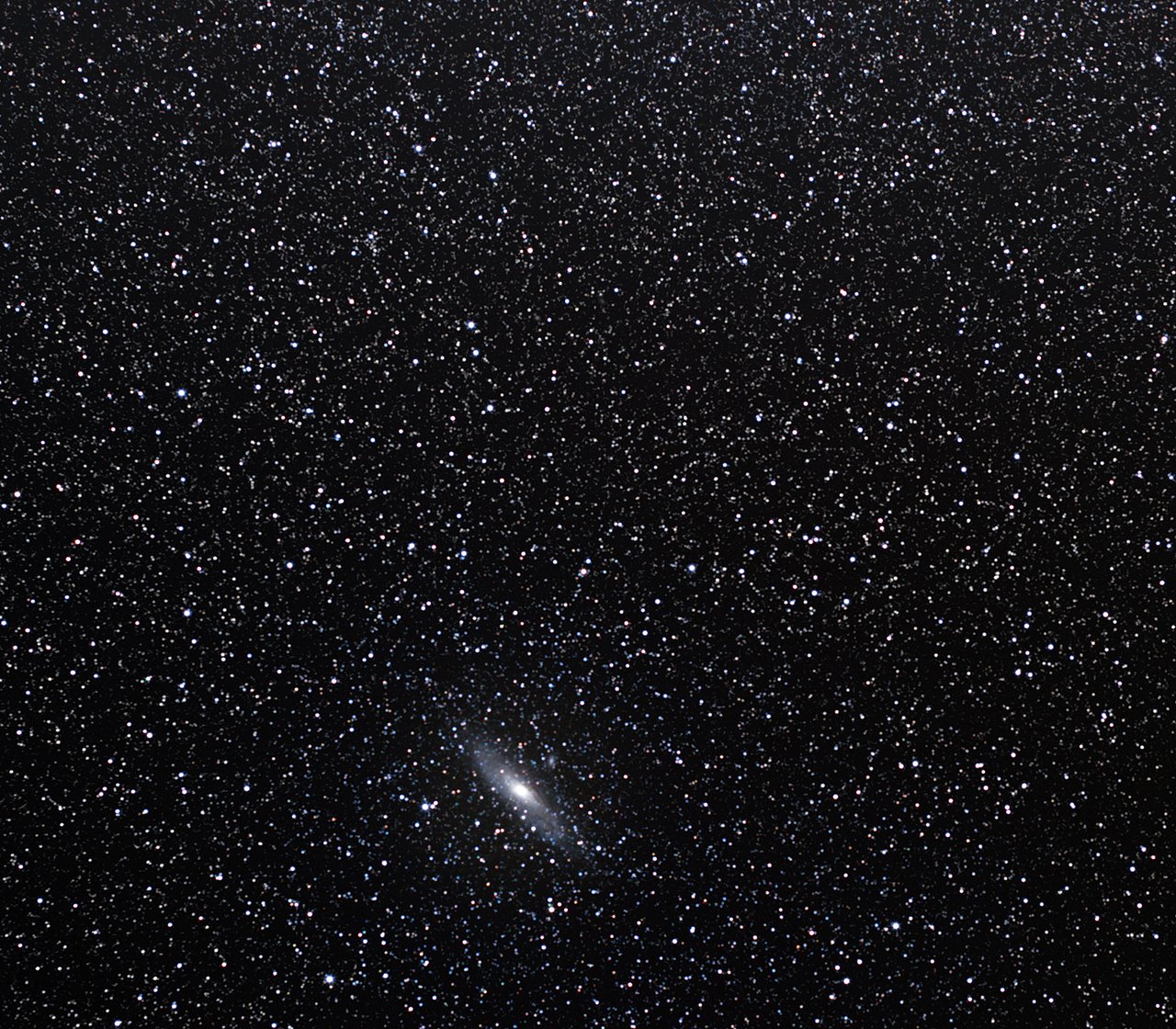
The Mysteries of Dark Matter: What Lies Beyond Our Stars?
Dark matter, an enigmatic substance that forms approximately 27% of the universe, remains one of the most intriguing mysteries in astrophysics. Despite accounting for a significant portion of the cosmos, it does not emit, absorb, or reflect light, making it invisible and detectable only through its gravitational effects. Scientists believe that dark matter plays a crucial role in the formation and structure of galaxies, influencing their movements and interactions. Various hypotheses propose that it could be composed of exotic particles, such as WIMPs (Weakly Interacting Massive Particles) or axions, yet no direct evidence has been found to confirm its existence. This tantalizing ambiguity raises profound questions about the fundamental nature of our universe.
The study of dark matter not only reshapes our understanding of astrophysics but also opens up a realm of philosophical inquiry about what exists beyond our perception. As researchers develop advanced technologies, such as particle accelerators and cutting-edge telescopes, the quest to unveil the truths of dark matter intensifies. Organizations worldwide are investing in large-scale experiments, aiming to catch a glimpse of these elusive particles. As we push the boundaries of our knowledge, we must confront the reality that most of the universe remains hidden from our senses. What lies beyond our stars continues to elude us, prompting questions about the nature of reality itself and the potential existence of other forms of matter and energy we have yet to comprehend.
Counter-Strike is a popular first-person shooter game that emphasizes teamwork and strategic gameplay. Players are divided into two teams, terrorists and counter-terrorists, who compete in various objective-based modes. For those looking to enhance their gaming experience, consider exploring the Top 10 Samsung Galaxy Accessories that can elevate your performance and enjoyment while playing.
The Life Cycle of Stars: How Celestial Bodies Are Born and Die
The life cycle of stars is a fascinating and complex process that illustrates the birth, evolution, and eventual death of these celestial bodies. Stars begin their journey in nebulas, which are vast clouds of gas and dust. Under the right conditions, a region within the nebula collapses under its own gravity, forming a protostar. As the protostar gathers mass, temperatures rise until nuclear fusion ignites at its core, marking the birth of a new star. Depending on its initial mass, the star enters the main sequence phase, where it spends the majority of its life fusing hydrogen into helium, producing energy and light that fuels entire solar systems.
As time progresses, the star exhausts its hydrogen fuel, leading to significant changes in its structure and energy output. Low to medium-mass stars swell into red giants and ultimately shed their outer layers, creating beautiful planetary nebulas while leaving behind a dense core that becomes a white dwarf. In contrast, more massive stars undergo a more dramatic transformation, culminating in a supernova explosion that disperses elements into space, seeding the universe for future star formation. The remnant can become a neutron star or even collapse into a black hole, marking the end of its life cycle. This cyclical process enriches the cosmos with heavy elements, enabling the formation of new stars and planets, highlighting the interconnectedness of cosmic evolution.
Unraveling Galactic Myths: Debunking Popular Misconceptions About the Universe
Throughout history, humanity has gazed up at the night sky, giving rise to intriguing myths and misconceptions about the universe. One prevalent myth is that the Milky Way is the only galaxy in existence. In reality, astronomers have identified over two trillion galaxies in the observable universe, each teeming with their own stars, planets, and potential for life. This stark number challenges our perception and highlights the vastness of the cosmos, reminding us that our galaxy is just one among many.
Another common misconception is the idea that black holes are massive cosmic vacuums that suck everything in their vicinity. While black holes possess immense gravity, they do not 'suck' objects like a vacuum cleaner. Instead, they pull matter towards them just like any other massive object does, governed by the laws of gravity. The concept of black holes can be captivating, but it's essential to separate fact from fiction to better understand the complexities of our universe.